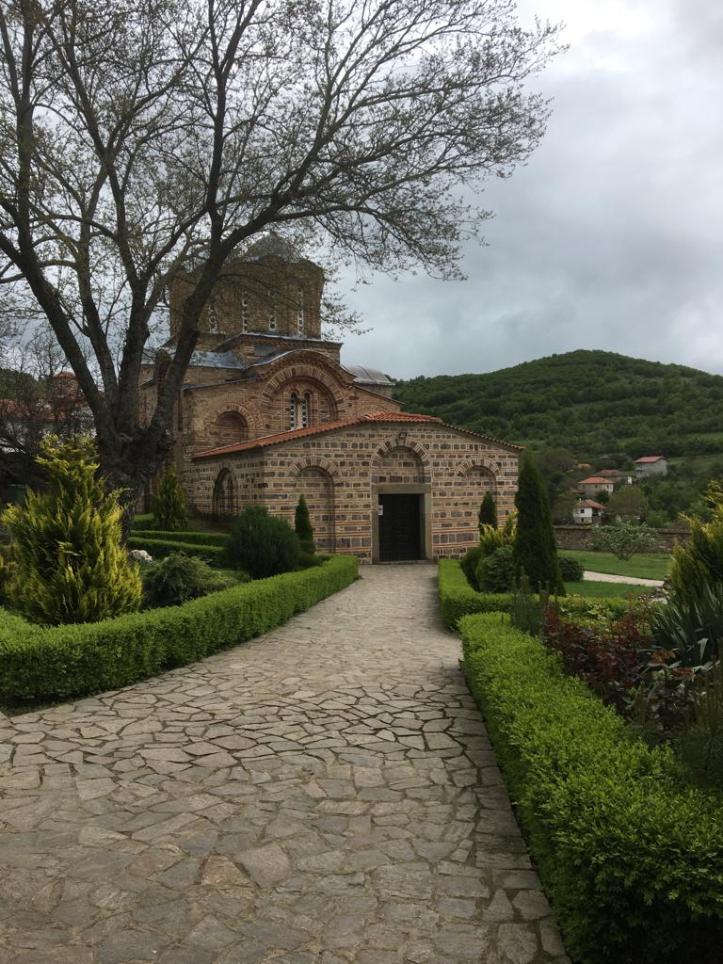
A small community nestles in the countryside, the silence only disturbed by the birds singing and causes you to talk in whispers as you walk around the grounds of this old monastery.
Located 40 kilometers northwest of Kochani at an elevation of 870 meters, you’ll find Lesnovo, a place that houses a monastery believed to date back to the 14th century. Due to its remote and secluded location this area served as a dwelling for hermits, also known as eremites. One of these hermits, Gabriel of Lesnovo, resided here and eventually passed away within the local caves.
The precise historical details regarding the founding of the monastery remain somewhat ambiguous. It’s not entirely clear whether Gabriel of Lesnovo was the founder of the monastery or if the monastery was established in proximity to his hermitage. Despite this uncertainty, the Lesnovo monastery stands as a testament to the spiritual and historical significance of the region.
A hermit, or an eremite is a person who choses to withdraw from society and live a solidarity life. A hermit does not form attachments with churches or communities but retires to the wilderness. Hermitage plays a role in a number of religions.
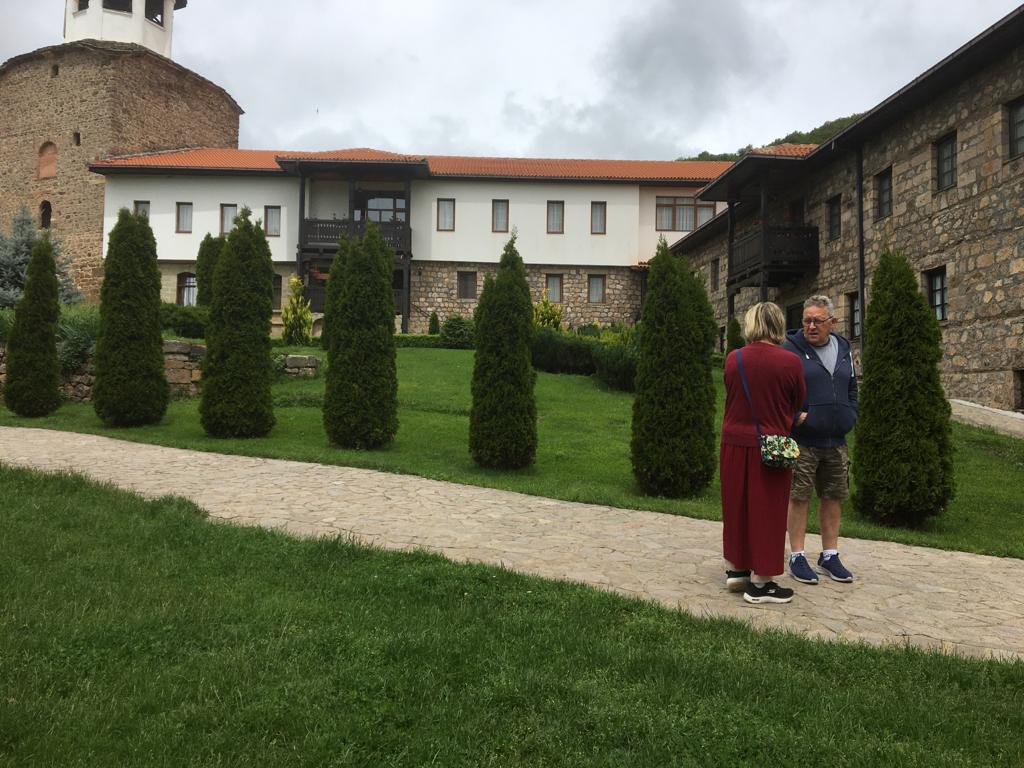
The church remains to this day. It is still an active community belonging to the Macedonian Orthodox Church. Different to other monasteries that we have visited such as Pantelej and Krika Palanka and Monastery Sveti Joakim Osogovski here the rules on entering are a lot stricter and women as required to wear long skirts, even over long trousers, these skirts are provided at the entrance to the monastery. The other point to note is that male visitors are not allowed to enter the church with shorts on, although my son-in-law was not denied entry but my brother-in-law was, I think it must depend on who is on duty to receive visitors at that time. But fair play, we respected their beliefs and my sister and I donned a skirt and as my brother-in-law enjoyed the grounds, we went into the church.
The church has beautiful fresco’s, it consists of 2 area’s the back area is the original which dates back to the 14th century with the front area being added at a later date. We were not permitted to take photo’s inside the church.
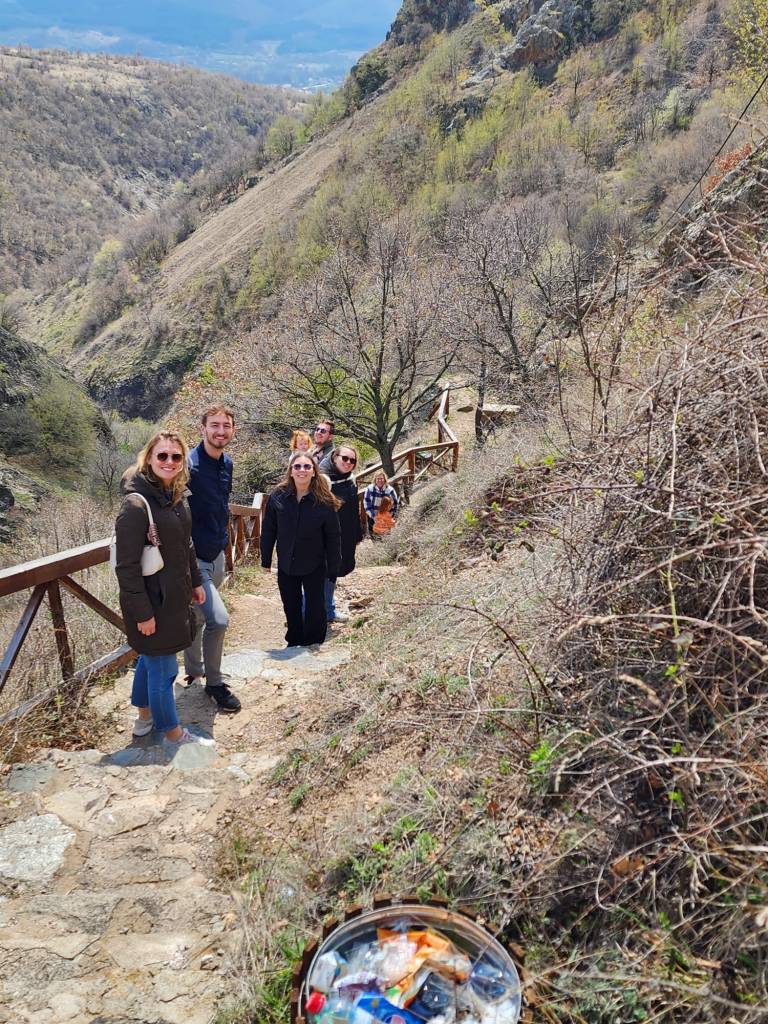
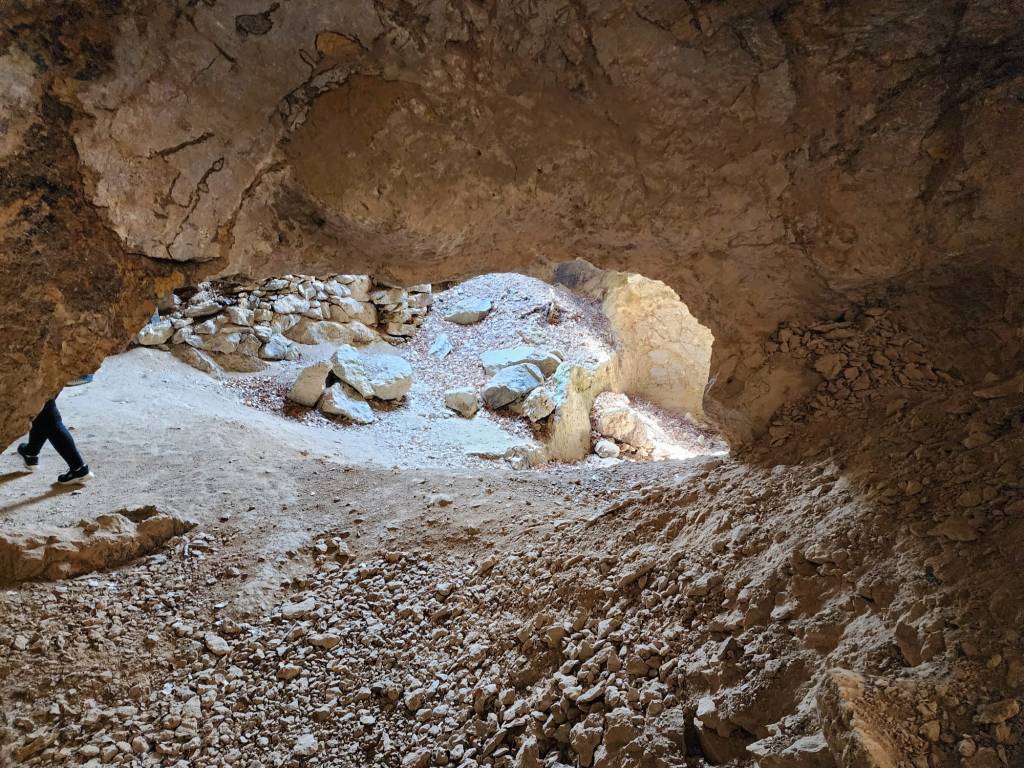

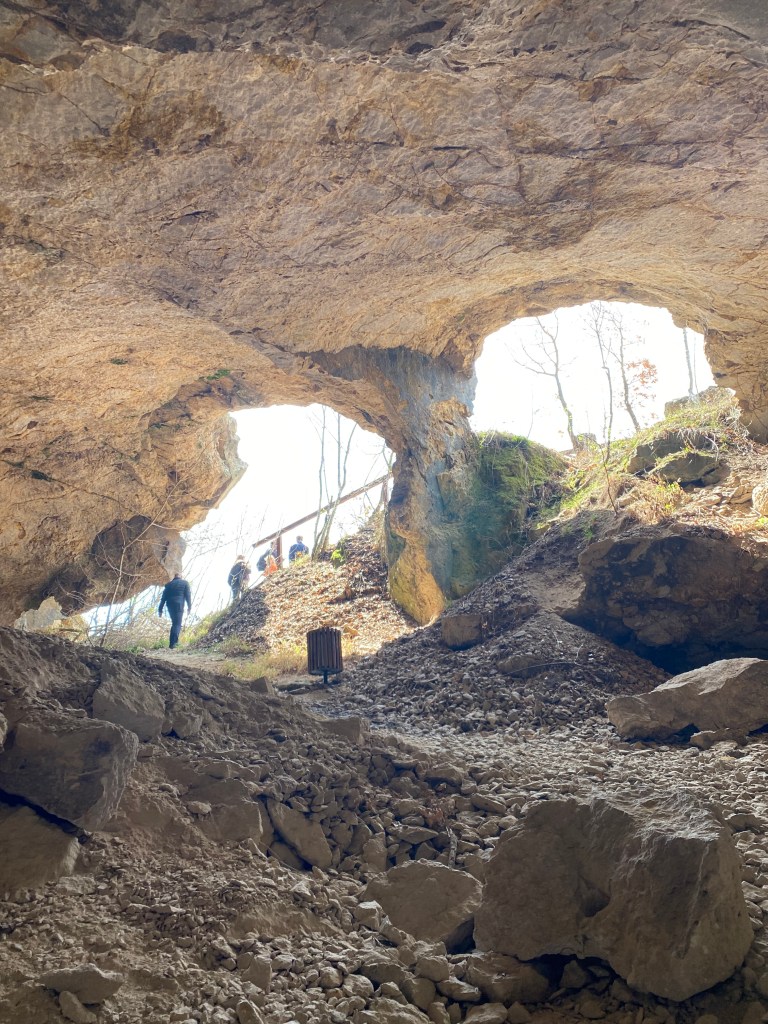
A short walk down from the monastery you can see caves in the mountainside. We went off to explore, there is a walkway from the road to the caves, it looked a little precarious but was actually sturdy and the walk was not as steep as it looked from the roadside.
Once by the caves you can walk from one side to the other, ducking and bending so not to bang you head but its quite amazing to see. We visited here also with our children and granddaughters and they thought it was fantastic to run through these caves.
There is not an awful lot of information about the caves, only to say that the caves are man made due to the mining of mill stones which took place in the early centuries by the hermits which lived in this area.
It is certainly worth a visit, you can also hike up to the top of the caves which not only gives you an amazing view of the surrounding areas’ you can also see more caves dotted around although it is unclear how to get to these caves.
On a very positive note, it was remarkably clean and tidy with the litter being for the most deposited in the designated bins!
 Wanderings in North Macedonia